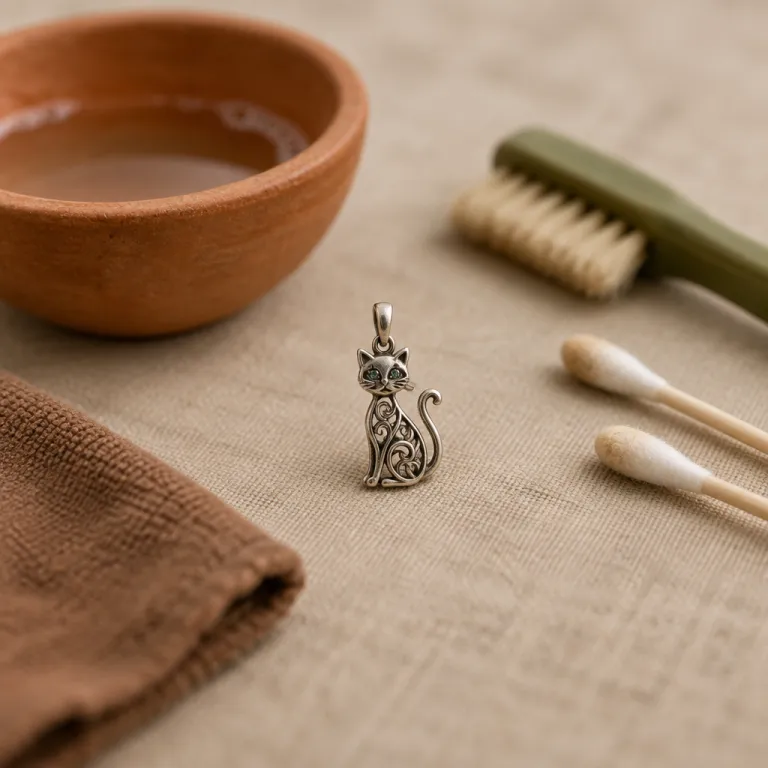
Why cat jewelry tarnishes faster on whiskers, paws and tiny details
Cat themed jewelry often tarnishes first on whiskers, ears and tiny paws. These delicate silver pieces use thinner metal and sharper engraving, so any sulfide tarnish layer builds faster and makes the details look blurred. When you clean tarnished cat jewelry too aggressively, you risk flattening those sculpted textures and losing the feline expression that gives each piece character.
The combination of skin oils, perfume, hairspray, and even baking aromas in your kitchen accelerates tarnish on raised items like noses and tails. Sweat and warm water from hand washing or showers leave mineral traces and chlorides that react with silver jewelry and sterling silver alloys, especially on recessed areas that stay slightly damp. Over time this creates tarnished jewelry that looks patchy, with dark tarnish hiding between fur lines while the rest of the pieces stay relatively bright and reflective.
Costume jewelry with cat motifs behaves differently, because its thin plating can wear through where the metal is soft and finely engraved. On these items, harsh jewelry cleaning methods that promise to remove tarnish quickly can actually remove the plating completely and expose a dull base metal. As the Jewelers of America and similar trade groups note in their care guidelines, plated finishes are only microns thick, which is why any plan to clean silver or plated designs must balance effective cleaning with a very gentle touch on every cloth stroke.
Safe everyday cleaning rituals before deep tarnish appears
Regular, gentle jewelry cleaning keeps cat pendants and rings elegant long before you need to clean tarnished surfaces. After each wear, wipe your clean jewelry with a soft, lint free cloth to remove skin oils and traces of soap or lotion. This simple habit keeps water dry marks and early tarnish from settling into tiny whisker grooves and between sculpted fur lines.
Choose a tightly woven soft cloth or a purpose made polishing cloth rather than paper towels, which can scratch silver pieces and costume jewelry finishes. For light soil, rinse the items quickly in warm water at about 90–100°F (32–38°C) with a drop of mild soap, then pat them completely dry with a second cloth reserved only for jewelry clean routines. Never leave cat themed items on a damp sink where hot water splashes and steam can attack sterling silver and plated costume surfaces or creep into hollow spaces, and always keep jewelry and cleaning cloths out of reach of curious pets.
When you handle your cat’s collar charms or your own matching ring, check clasps and soldered joints while you clean. If you see flaking metal on costume jewelry, treat it as a warning that aggressive attempts to remove tarnish could strip the remaining finish. For more on balancing shine with safety around your pet, read this guide on avoiding cat choking hazards when wearing cat jewelry, then adapt the same care mindset to every cleaning step so nothing small or sharp can detach near your cat.
Baking soda pastes, aluminum foil baths and polishing cloths compared
When you finally need to clean tarnished cat jewelry, the method you choose matters as much as the products. A paste made from baking soda and warm water works well on solid sterling silver, but it must be used with a very soft touch. Rub only with a soft cloth in the direction of the design, never across fine whiskers or fur textures, and limit contact time to about 30–60 seconds before rinsing.
For a deeper clean silver treatment, many owners use a tray lined with aluminum foil, hot water and baking soda to remove tarnish chemically. This aluminum foil bath can lift tarnish from silver jewelry without heavy rubbing, which protects raised details on paws and tails. However, it is not suitable for costume jewelry, glued stones, enamel, pearls, or mixed metal items, because the reaction can damage adhesives, etched finishes and thin plating completely; the Gemological Institute of America (GIA) and other gemological laboratories specifically caution against strong chemical or ultrasonic methods on such vulnerable pieces.
On delicate costume pieces and silver pieces with blackened patina, a high quality polishing cloth is usually the safest choice. These cloths contain a mild jewelry clean compound that targets tarnish while leaving intentional shading intact. For a step by step care routine tailored to feline motifs, pair these methods with the long term advice in this article on how to keep your cat jewelry looking its best, then adjust pressure and time depending on how soft the metal feels under your fingers.
DIY aluminum foil method for detailed silver cat pieces
For solid silver cat pendants or charms with intricate fur lines, a carefully controlled aluminum foil bath can clean tarnished areas while preserving relief. Before you begin, gather a glass or ceramic bowl, aluminum foil, baking soda, a kettle or measuring cup for hot water, plastic or wooden tongs, and a soft drying cloth. A simple line drawing or photo showing the jewelry lying flat on the foil, each piece touching the metal, can help you copy the correct setup and avoid stacking items.
Line a glass or ceramic bowl with aluminum foil, shiny side up, and place the jewelry pieces so that each item touches the foil without overlapping. Sprinkle one to two tablespoons (15–30 ml) of baking soda over the items, then pour in enough hot water at about 120–140°F (49–60°C) to cover them completely. You will see bubbles as the tarnish transfers from the silver pieces to the aluminum, which helps remove tarnish without scrubbing fragile whiskers; allow the reaction to work for 3–5 minutes, then stop even if some discoloration remains.
After a few minutes, lift each piece with plastic tongs, rinse in warm water, and water dry thoroughly with a soft cloth reserved for jewelry cleaning. Inspect the items under good light, then finish with a gentle pass of a polishing cloth only on broad surfaces, avoiding engraved eyes and tiny paw pads. Never use this soda clean method on costume jewelry or on cat items with glued crystals, enamel, hollow construction, pearls, or obvious plating edges. The combination of hot water, baking soda, and aluminum foil can weaken adhesives and may cause plated layers to lift or tarnish in irregular patches; if you are unsure whether your cat ring is solid sterling silver or plated costume metal, do a quick magnet check, look for hallmarks such as “925,” and consult a professional jeweler before you attempt any at home jewelry clean experiment.
When to seek professional help and how to prevent future tarnish
Some cat themed items are simply too precious or fragile for home cleaning, especially heirloom sterling silver lockets or finely articulated tails. If you notice that tarnished jewelry shows yellow or copper tones after a gentle clean, the piece may be losing its plating rather than just showing surface tarnish. In that case, a professional jewelry cleaning service can assess whether replating or structural repair is needed before you wear it again, and many bench jewelers can also tighten tiny hinges and reshape bent ears or tails.
Professional ultrasonic cleaners use high frequency waves in warm water to clean jewelry, but they can shake loose stones or damage soft costume finishes. Ask the jeweler to protect delicate cat details and to avoid harsh chemicals on any costume jewelry or mixed metal items, and request that they skip ultrasonic cleaning on glued or enamelled designs. For everyday owners, this guide on proper accessory management for cat jewelry offers a useful framework for deciding which pieces stay for daily wear and which deserve occasional, expert care.
To slow future tarnish, store silver jewelry in anti tarnish pouches and keep costume pieces in separate, dry compartments. A tiny layer of clear nail varnish on the back of inexpensive costume jewelry can shield skin from base metals while leaving the front free for gentle clean silver polishing. Always let any protective coating cure completely before contact with skin or fur, and keep all cleaning products, mild soap solutions, and polishing cloth residues away from your cat’s curious nose and paws; a simple photo of your storage setup can also remind you to keep silver, plated, and pet items clearly separated.
FAQ
How often should I clean tarnished cat jewelry I wear daily ?
For cat jewelry you wear every day, a quick wipe with a soft cloth after each use is usually enough, and a deeper clean with mild soap and warm water once a month keeps tarnish under control. Reserve baking soda or aluminum foil methods for when you see visible darkening that simple polishing cloth care cannot remove. This rhythm protects delicate details while keeping both silver jewelry and costume pieces looking refined and comfortable against your skin.
Is baking soda safe for all types of cat jewelry ?
Baking soda is generally safe for solid sterling silver cat designs when used as a gentle paste or in a controlled aluminum foil bath. It is not safe for most costume jewelry, plated items, or pieces with glued stones, because it can scratch soft finishes or undermine adhesives and decorative coatings. When in doubt, test on an inconspicuous area or ask a professional jeweler before you clean tarnished surfaces with any soda based method, especially on vintage or sentimental cat charms.
Can I use regular household soap to clean silver cat pieces ?
Many household soaps contain moisturizers or strong detergents that leave residue on silver pieces and may dull their shine. A small amount of mild soap in warm water is safer for jewelry cleaning, especially when followed by a thorough rinse and careful water dry routine with a dedicated cloth. Avoid antibacterial or heavily scented formulas, which can react with metals and accelerate tarnish on fine details or leave films in recessed whisker lines.
How do I know if tarnish means my cat jewelry is losing its plating ?
If cleaning reveals uneven color, with brassy or copper patches beneath a fading silver tone, your cat jewelry is likely losing its plating rather than just showing surface tarnish. Tarnished jewelry that returns to an even, cool silver shade after a gentle jewelry clean is usually solid metal, while patchy results suggest thin plating or worn rhodium. When you see this, stop home cleaning and consult a jeweler about replating or alternative ways to wear the piece safely, such as limiting it to short occasions or keeping it as a display keepsake.
Are ultrasonic cleaners safe for delicate cat themed items ?
Ultrasonic cleaners can be effective for robust, solid metal pieces, but they pose risks for delicate cat motifs with fine whiskers, hollow bodies, or glued stones. The rapid vibrations may loosen settings or crack enamel, especially on costume jewelry and older items with brittle solder. Use ultrasonic methods only under professional supervision and never for sentimental or irreplaceable cat designs with very soft or intricate details, and ask the jeweler to show you which pieces from your collection are sturdy enough for this process.